The Possesive Form
It shows a relationship of belonging between one thing and another. To form the possessive, add apostrophe + s to the noun. If the noun is plural, or already ends in s, just add an apostrophe after the s
EXAMPLES
the car of John = John's car
the room of the girls = the girls' room
clothes for men = men's clothes
the boat of the sailors = the sailors' boat
For names ending in s, you can either add an apostrophe + s, or just an apostrophe. The first option is more common. When pronouncing a possessive name, we add the sound /z/ to the end of the name.
EXAMPLES
Thomas's book (or Thomas' book)
James's shop (or James' shop)
the Smiths's house (or the Smiths' house)
The possessive can express a relationship between people.
EXAMPLES
John's mother is running late.
Mrs Brown's colleague will not be coming to the meeting.
Taken from: https://www.ef.com/wwen/english-resources/english-grammar/forming-possessive/
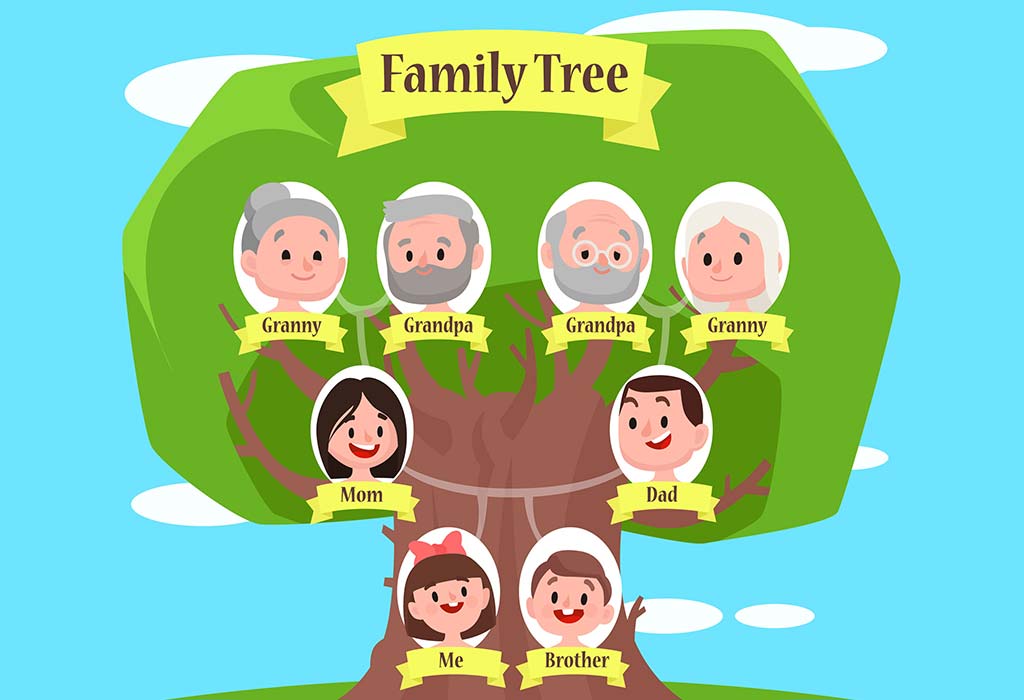
We can use the possesive form when talking about familial relationships within a family tree.
The Cambridge Dictionary defines family tree as a a drawing that shows the relationships between the different members of a family, especially over a long period of time.
Your family members are also called your relatives. You have an immediate or nuclear family and an extended family. Your immediate family includes your father, mother and siblings. Your extended family includes all of the people in your father and mother's families.
You may also have a stepfamily. Your stepfamily includes people who became part of your family due to changes in family life. These changes may include death, divorce or separation. New partnerships create new children. The new children and their relatives become part of your blended family. Some people are born into a stepfamily.
Taken from: https://www.englishclub.com/vocabulary/family.htm
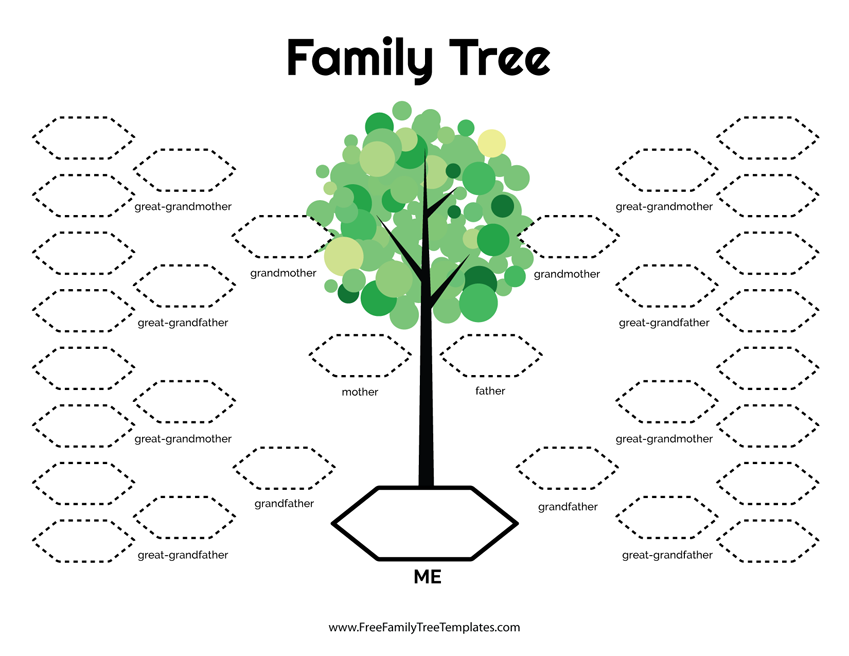
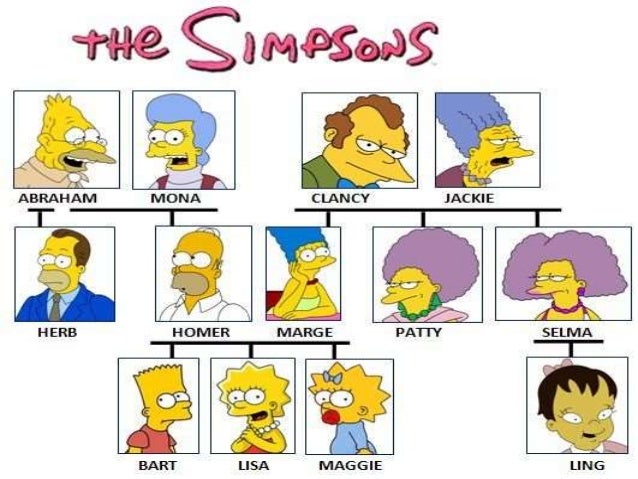
In the following video, you will learn how a family tree is created and the respective vocabulary.
Practices
Practice #6
In the following puzzle, you must find the words related to family tree vocabulary.
MOTHER
|
FATHER
|
SON
|
DAUGHTER
|
SISTER
|
BROTHER
|
GRANDMOTHER
|
GRANDFATHER
|
GRANDPARENTS
|
NIECE
|
NEPHEW
|
COUSIN
|
AUNT
|
UNCLE
|
WIFE
|
HUSBAND
|